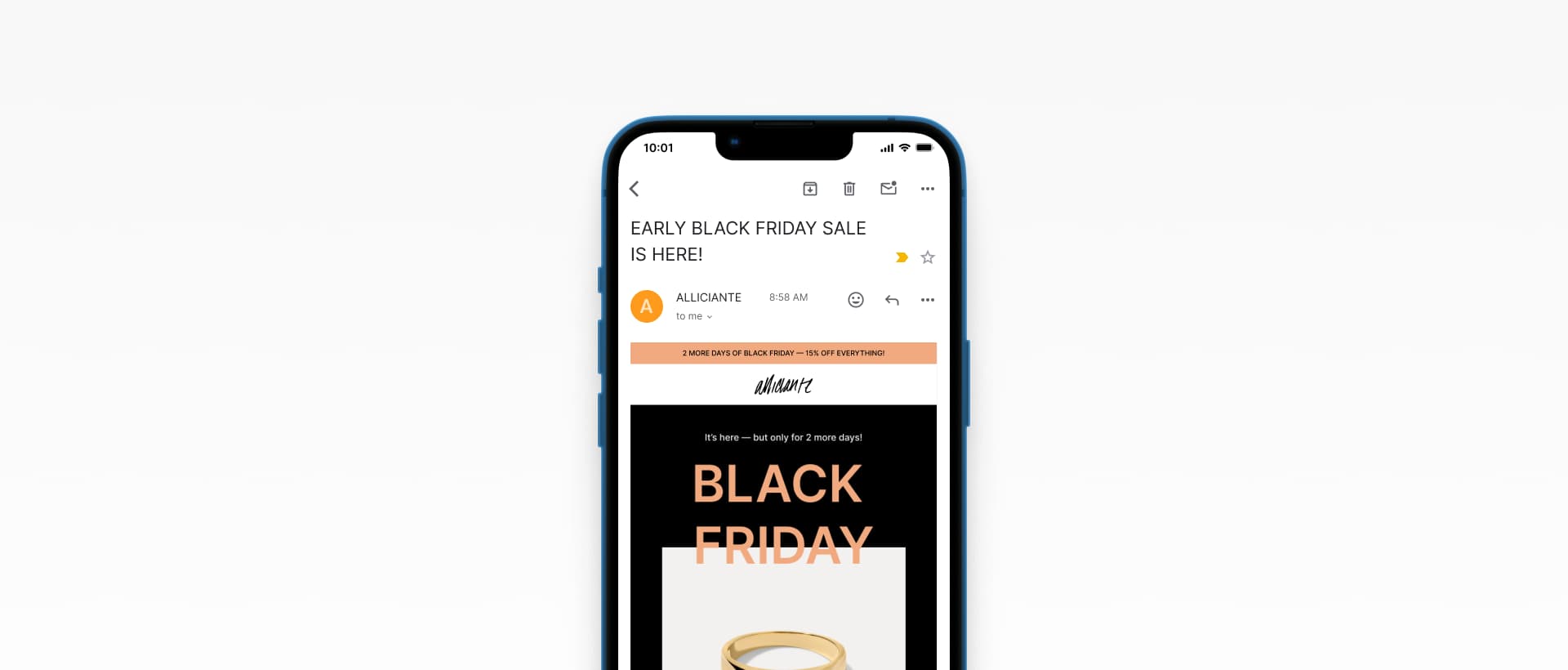
Most brands treat BFCM email the same way they treat paid ads: blast the list, crank up the frequency, and hope volume converts. It rarely does. The brands that extract real revenue from email during BFCM treat every send as a separate tool with a separate job – and they know when to stop sending.
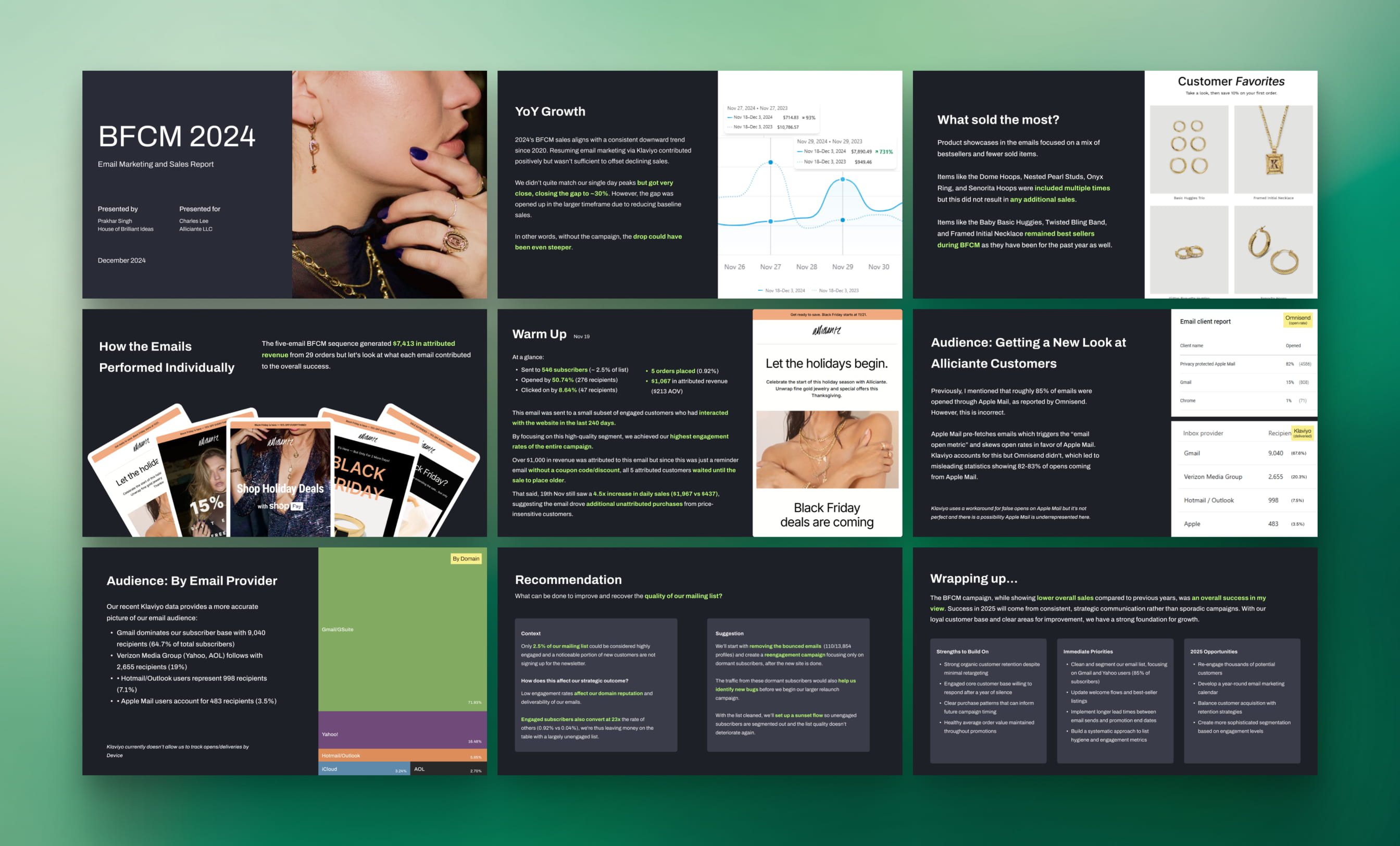
We ran a 5-email BFCM sequence for a DTC jewelry client after a full year of email inactivity. No ad spend behind it. The campaign reached over 13,000 inboxes, generated $7,400 in direct email revenue, and contributed to $22,500 in total promotional sales across email, social, and web. Here is what each email did, why it existed, and what the results exposed about how email actually works during the highest-traffic week of the year.
01The Warm-Up: Start with a Hello.
A domain that has been quiet for months and suddenly sends thousands of emails looks identical to spam. Gmail, Yahoo, and Outlook track sending patterns over time, and a sudden volume spike gets throttled before it ever reaches the inbox. Starting with a small, engaged segment before the main campaign is standard practice for a reason.
In "Pre-Suasion," Robert Cialdini makes the case that the moments immediately before an ask matter as much as the ask itself – that what you prime someone with determines the state they are in when the pitch arrives. A brand that sends one genuine, no-strings message before a sale is not just signaling to ISPs that it is a legitimate sender. It is repositioning the relationship. The sale email that follows lands in a different context than it would have without it.

But deliverability is only half the job. The warm-up also re-establishes the relationship. The message before the ask shapes how the ask is received. A warm-up email is not selling anything – it exists so the sales email that follows lands on familiar ground rather than in a cold inbox.
The key decision is who receives it. We sent to the most engaged 2.5% of the list – filtered by recent website interaction, no discount, no coupon, just a heads-up. Open rate was over 50%. The unattributed signal was louder still. Total sales that day spiked to more than four times the daily baseline.
02Full Send: Getting the Megaphone Out
The launch email carries the heaviest revenue load. It makes the first offer to the broadest qualifying audience.
That said, "broadest" does not mean everyone. The oldest rule in direct response still holds: who you send to matters roughly as much as what you offer, and both matter far more than how it looks. Every unengaged non-open tells ISPs your content might not be wanted. Every unsubscribe confirms it.
What makes this more consequential than most brands realize is how ISPs actually process the signal. They do not evaluate reputation send-by-send. Gmail, in particular, maintains a rolling domain reputation that weights recent behavior heavily and decays slowly. A campaign with high complaint rates in November leaves a mark that December and January sends will inherit.
We expanded to previous customers and recent site visitors – roughly 6,000 subscribers. The open rate dropped, as expected, and the click rate followed. But it generated nearly a third of total campaign revenue and was the highest-grossing single email. The tradeoff was worth it. The declining engagement was a clear signal, though: the next expansion would cost more than it earned.
03Navigating the Tight Rope (that is the unsubscribe button)
By email three, your audience is filtering you out. The instinct is to get louder – bigger discount, more urgency. But the customers still undecided after two emails have seen the deal – another version of the same message won't move them.
Buy Now, Pay Later used to be one of the most underused levers in holiday email marketing. Merchants offering installment plans historically see a meaningful lift in cart conversions for higher-ticket items, and shoppers using BNPL tend to spend more per order than those paying upfront. A significant portion say they would not have purchased at all without the option. Most brands never mention it until checkout – long after the purchase decision has already been made or quietly abandoned.
It is worth noting, though, that the conversation around BNPL has shifted. Late payment rates have been rising consistently year over year, and a growing share of BNPL usage is happening on everyday purchases rather than considered, discretionary ones. Regulators in the US, UK, and EU are all moving toward stricter oversight. As a marketing lever, it still works – but it sits in more complicated territory than it did a few years ago. Mentioning it honestly, as a practical option rather than a push to spend more, is the right approach.
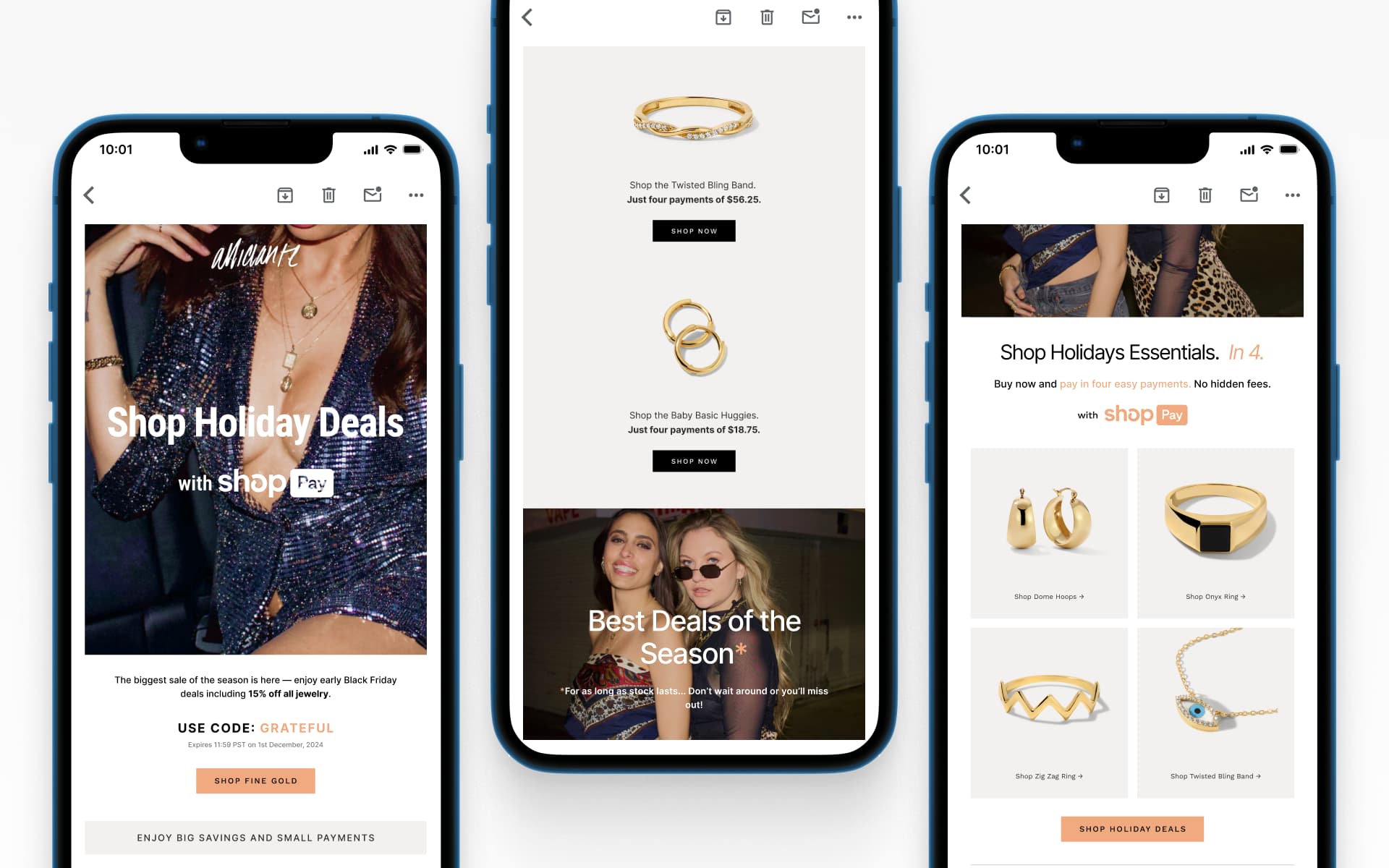
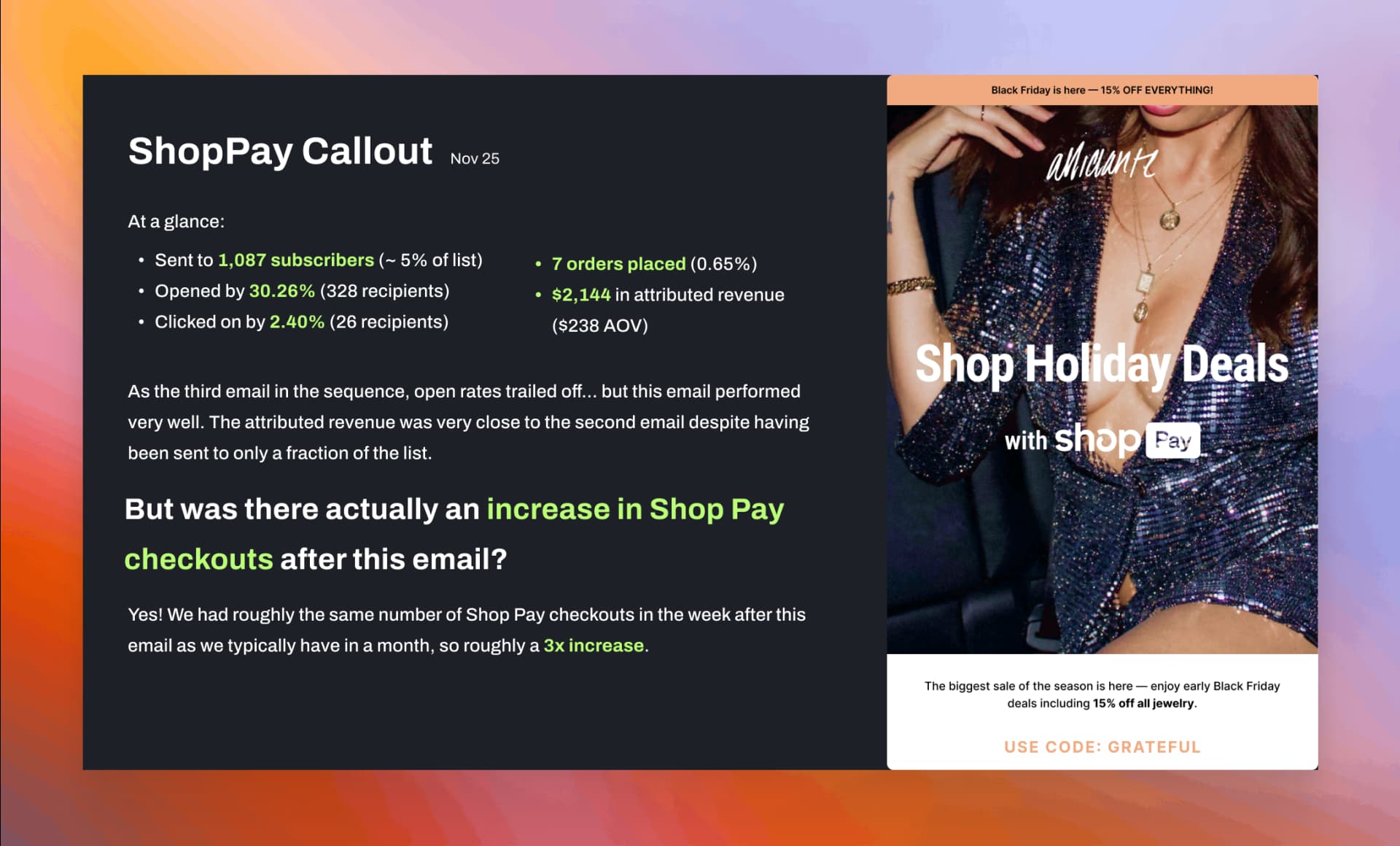
Our third email was a ShopPay Installments callout. Sent to about 5% of the list, it generated attributed revenue nearly matching the launch email on one-sixth the audience. The downstream effect was sharper still: Shop Pay checkouts tripled in the days that followed.
04Competing for Attention on Black Friday
The average consumer receives somewhere between 15 and 20 promotional emails on Black Friday. Sending to the entire list means competing with everyone for the same finite window of attention – and for high-ticket categories, that window rarely closes in the brand's favour on the day itself.
There is a well-documented consideration lag for higher-value purchases. A shopper sees the email, visits the site, adds to cart, and leaves. They return two to four days later. The email's job on Black Friday is not necessarily to close the sale. It is to stay present during the deliberation window that follows.
We sent to engaged subscribers only. Black Friday was the best single sales day of the entire campaign – but most of the email-attributed revenue arrived after Black Friday itself. There was a dip the next day, then the second-highest peak of the campaign. The email planted a flag that converted days later, which means any brand cutting off their sale or their tracking 24 hours after sending is counting a fraction of what the email actually earned.
One subscriber received the Black Friday email weeks after the campaign window had closed. She unsubscribed from the list. One hour later, she placed her first order since 2021. The event log tells the story that attribution cannot. The email drove the action. She just did not want more emails. Success does not always look like an open rate.
05Cyber Monday is Not a Second Black Friday
Cyber Monday is treated as a second Black Friday. It is not. By email four or five, fatigue has set in. The most interested customers have already purchased. The list has done most of what it is going to do. The ones who have not acted are not waiting for different copy – they are waiting for a different season, a different reason, or nothing. More emails will not change that.
The less visible cost is what matters most. Klaviyo's deliverability team has written extensively about the reputation damage that follows aggressive BFCM sending – specifically the need for a multi-week repair window in December before re-engaging broader audiences. The welcome-back email in January that lands in spam did not fail in January. It failed in November, when unengaged contacts were sent one email too many and the complaint signals accumulated quietly. The Cyber Monday email should be evaluated not just by what it earns, but by what it costs your next campaign.
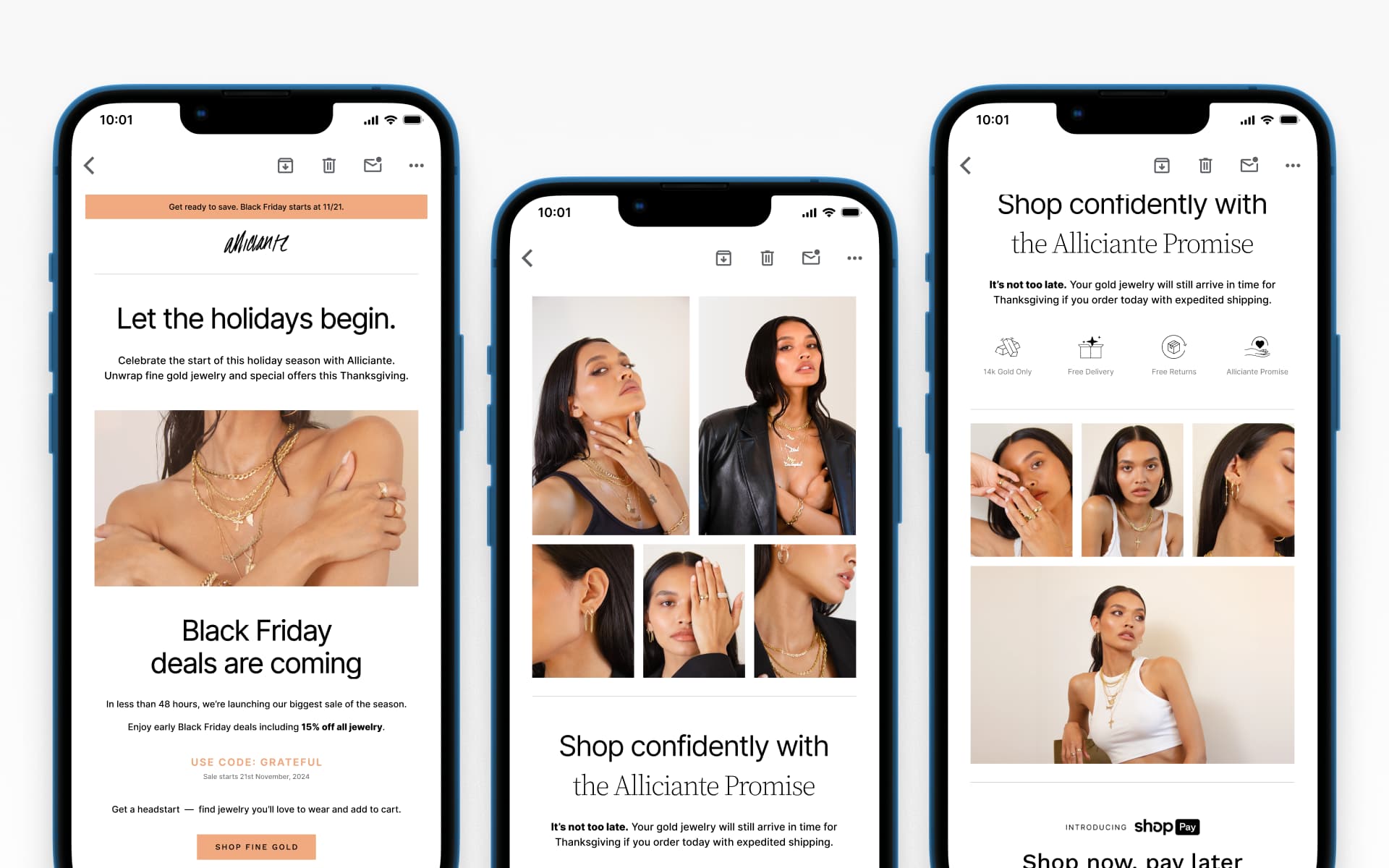
Our Cyber Monday email was the weakest by every metric – the lowest open rate, the lowest click rate, two attributed orders. Four to five emails appears to be the upper limit for a re-awakened list. Adding a sixth would have cost more in reputation than it earned in revenue.
06Don’t Just Walk Away – Prepare For Next Year
The campaign is over, and you now know more than you did before it: who is engaged, what they actually buy, when they convert, and how many emails they will tolerate before they tune out. That information is worth more than the revenue number at the top of the report.
Use it. Clean the list – remove the bounced addresses, build a sunset flow for the unengaged contacts who are quietly dragging down deliverability every time you send. Update the products in your automated flows to reflect what actually sold, not what you thought would sell. If a significant portion of your list is on Gmail, optimize for Gmail – including dark mode rendering, where most email templates quietly fall apart.
Your BFCM campaign may not have been everything you expected. But the ones that treat it as an annual audit of their email channel walk into the following year with a cleaner list, a sharper understanding of their audience, and a sender reputation that gives them a head start the next time the calendar matters.
End of entry