Figma has effectively exhausted its primary growth engine by standardizing interface design teams across the Fortune 500. When nearly every practicing product designer operates within the same browser-based tool, expansion through user acquisition inevitably reaches mathematical saturation. Software organizations rarely employ more than one designer for every ten engineers and product managers, locking pure design tools into an immutable seat ratio. To sustain its public market valuation trajectory, the platform had to aggressively break through this ceiling by encroaching upon the adjacent software development lifecycle.
The consensus narrative often reduces platform expansion to simple collaborative convenience. Market commentators frequently describe workspace consolidation as a benevolent effort to keep cross-functional stakeholders aligned in a single browser tab. That perspective misreads the underlying software economics driving enterprise procurement contracts. Figma is not merely courting external collaborators; it is systematically contesting the operational dominance of Atlassian, Miro, and Notion for enterprise workflow ownership.
Retaining commercial momentum requires repositioning the interface canvas from an isolated vector sandbox into the primary ledger of product consensus. Traditional product delivery pipelines suffer from persistent friction between narrative requirements, visual specifications, and backlog tracking. When product strategy splits across disparate software vendors, the resulting translation tax slows deployment velocity and introduces specification drift. By positioning the spatial canvas as the foundational system of record, Figma seeks to capture the budget lines previously reserved for asynchronous documentation platforms.
"Figma started as a design tool, but design is just one part of building software. The future of product development isn't passing static files over a fence; it's everyone – engineers, PMs, designers, and AI agents – operating on the exact same canvas."
Dylan Field, CEO of Figma, Keynote on X & Platform Recap
01Displacing Confluence and Jira at the Center of Consensus
The product requirements document has spent decades trapped within static text environments that decay the moment design exploration begins. Product managers traditionally draft detailed requirement matrices in enterprise documentation platforms like Confluence while designers construct parallel realities within separate vector artboards. This architectural divide ensures that written specifications and visual interfaces operate as asynchronous artifacts that diverge over time. The platform attacked this disconnection by embedding interactive requirements documentation, structured delivery phases, and contextual reference attachments directly beside interface components.
Spatial documentation alters the mechanics of product management by eliminating the artificial boundary between business logic and visual execution. Product managers can now bind user stories, edge cases, and acceptance criteria to specific frames using bidirectional connectors that listen to upstream status updates. Instead of linking external documentation links into Jira tickets, teams formulate and negotiate product architecture within the same spatial coordinates where interface decisions occur. The canvas ceases to be a downstream recipient of static requirements and becomes the active environment where scope is settled.
Enterprise SaaS Rationalization: The Canvas Consolidation Effect
- Whiteboarding & Ideation (Miro, Mural): Absorbed directly into native FigJam boards with unified enterprise billing and permission groups.
- Product Requirement Specs (Confluence, Notion): Replaced by spatial canvas documents linked bidirectionally to live component variants.
- Executive & Team Decks (PowerPoint, Pitch): Replaced by Figma Slides with dynamic token reactivity and embedded working prototypes.
- Developer Handoff Suites (Zeplin, InVision): Fully replaced by Dev Mode, Code Connect, and Model Context Protocol (MCP) integrations.
This structural transition expands Figma's target user profile to encompass technical program managers, quality assurance leads, and engineering directors. Enterprise seat expansion benchmarks indicate that non-designer roles represent the fastest growing tier of paid workspace seats across major accounts. By turning sprint milestones, scope trade-offs, and compliance sign-offs into native canvas primitives, the platform reduces dependency on external issue tracking suites. Each requirement mapped directly to a design element transforms passive visual inspect viewers into fully monetized seats.
02Runtime Code and the Dissolution of Handoff
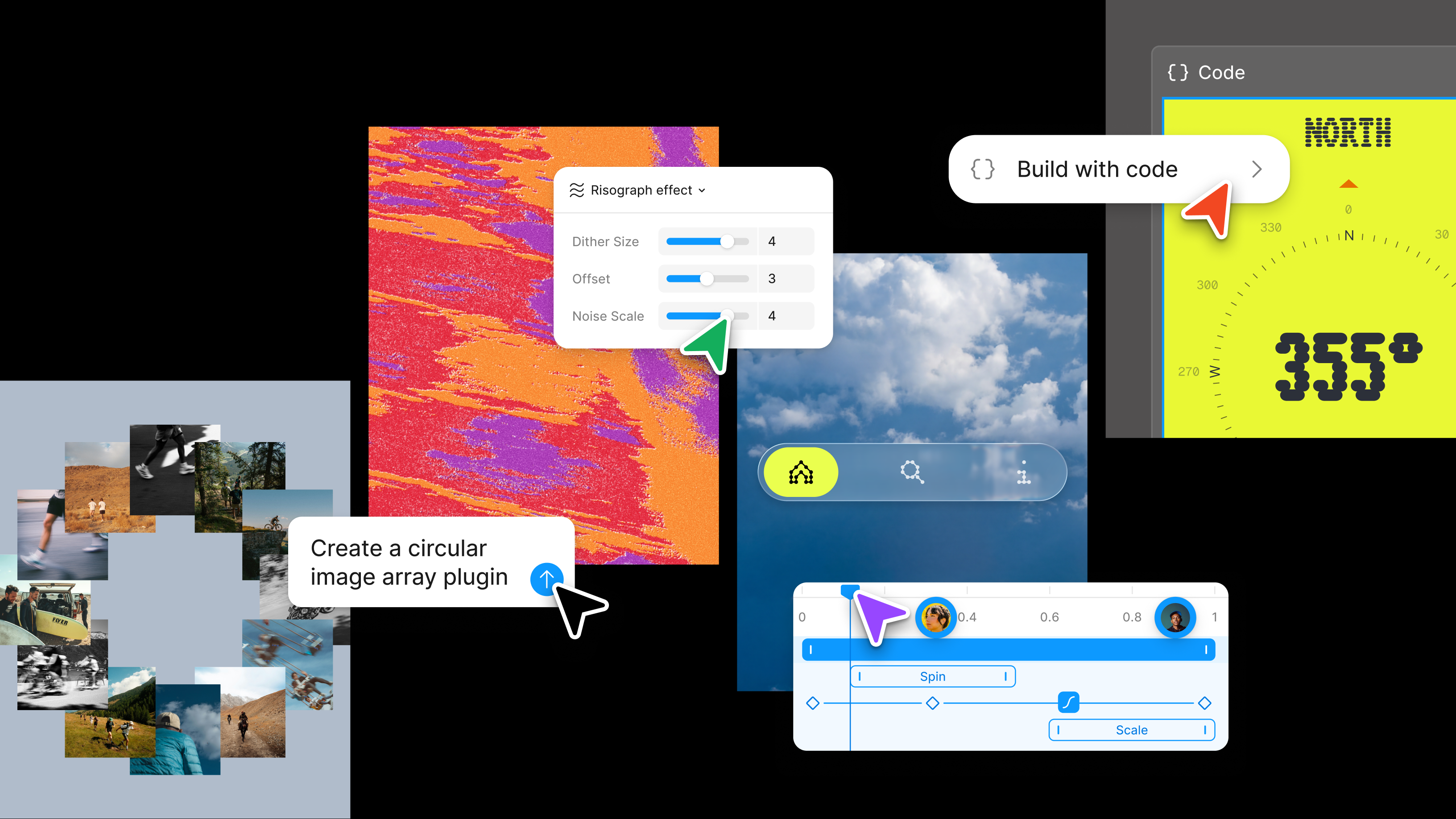
For more than a decade, digital product design existed in an uneasy state of approximate representation. Designers pushed static vectors and bezier curves that frontend engineers had to reconstruct manually in target frameworks like React, SwiftUI, or Compose. The launch of Code Layers and WebGPU-accelerated shaders marks a decisive break from this legacy pattern of translation. Working frontend code can now be imported directly from GitHub repositories to execute natively inside the design canvas as functional layers.
Importing production code into the authoring environment closes the historical fidelity gap that has plagued component libraries. Interface designers no longer create idealized approximations of UI states that fail to account for runtime constraints or layout reflows. When real component code renders alongside vector frames, edge cases involving dynamic localization strings or complex data states appear immediately during visual exploration. Design systems no longer require dual maintenance pipelines where visual libraries and production packages drift out of alignment.
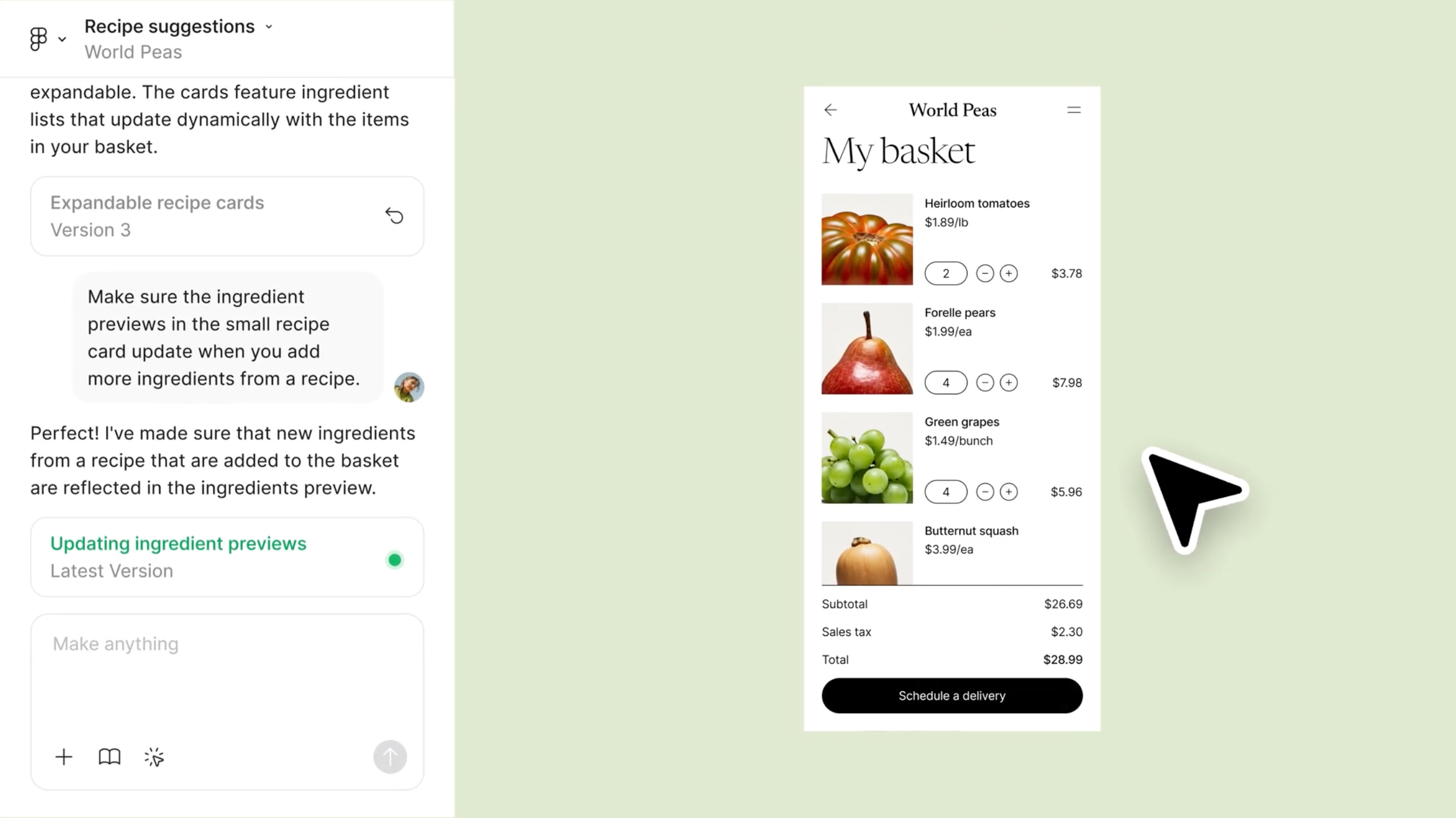
This consolidation reaches its logical culmination through agentic developer context integrations. Through an official Model Context Protocol (MCP) server implementation, the platform surfaces component tokens, design variables, and layout constraints directly to external AI coding environments like Cursor and Claude Code. Engineers working in terminal or editor environments query canvas components as structured APIs rather than inspecting visual files. As AI-assisted code generation replaces manual stylesheet drafting, the canvas serves as the authoritative source of geometric and stylistic intent.
03Enterprise Governance and Seat Economics
Capturing cross-functional enterprise budgets requires architectural control over organizational governance and information access. Workspace administration features multi-tiered permission matrices, programmatic variable modes, and federated design system distribution across business units. Global conglomerates operating multiple brand properties can now isolate sensitive intellectual property while enforcing shared design tokens across global teams. These administrative controls address the stringent compliance and data segmentation standards demanded by enterprise procurement officers.
The economic implications of this architectural moat are visible in Figma’s multi-tiered seat packaging and consumption models. The separation of Full, Dev, and Collab seats enables enterprise buyers to distribute access across cross-functional departments without committing every employee to an authoring tier. Meanwhile, consumption quotas for background agent actions and generative plugins introduce usage-based monetization on top of fixed seat subscriptions. This dual monetization engine extracts incremental revenue from everyday organizational workflows, creating a compounding revenue baseline that resists corporate seat audits.
Enterprise software seat rationalization trends show Chief Information Officers actively eliminating overlapping contracts for digital whiteboards, requirements wikis, and presentation tools. By delivering functional parity with dedicated tools while retaining spatial context, Figma positions itself as the default consolidation choice. Displacing an incumbent requires more than matching feature checklists; it demands rendering the competitor's distinct medium obsolete.
End of entry