
The release of bi-annual platform drops – codified by Shopify Editions – formalized an existential pivot for thousands of venture-backed software vendors. By shipping native bundle logic, automated tiered discounting, and post-purchase checkout upsells directly into the core engine, the platform effectively decommissioned several primary monetization categories within its App Store. Merchant discourse predictably greeted these announcements as platform modernization that eliminates extraneous subscription fees. That interpretation misunderstands the structural mechanics of digital platform monopolies.
Platform ecosystems operate on an extractive lifecycle that masks capital efficiency as benevolent infrastructure expansion. In this dynamic, external developers do not constitute protected partners, but rather outsourced market research teams. They identify latent merchant requirements, finance early product experiments, and validate customer willingness to pay. Once a third-party product proves indispensable across a sufficient percentage of merchant stores, the platform ingests that functionality directly into its core codebase.

This sequence is neither accidental nor newly invented. Software distribution platforms have followed this trajectory since operating systems first incorporated independent desktop utilities into standard system installations. What distinguishes modern commerce platforms is the speed with which feature ingestion occurs. The transition from independent ecosystem viability to native platform parity now takes quarters rather than decades.
"The goal of Shopify is to build the world's most robust, performant commerce engine. When merchants tell us that core features like bundling, discounts, or checkout customization are slowing down their stores because of third-party script bloat, we have a duty to make those primitives native."
Tobi Lütke, CEO of Shopify, Announcement on X & Shopify Editions
01The Incubation Tax: How App Stores Outsource R&D Risk
To understand why platform operators absorb these specific application tiers, one must analyze the historic operational costs of merchant feature development. Building multi-variant product bundles across global currencies and varied warehouse locations requires significant engineering capital. Independent software vendors absorbed that financial exposure over eight years, handling edge cases and merchant support tickets. They established that bundled merchandising directly improves average order value and lifetime customer retention.
Shopify observed these telemetry signals in aggregate across its merchant network. Every install of a third-party discounting tool, every API call to a cross-sell service, and every checkout abandonment event caused by app latency generated granular behavioral data for the platform operator. Independent vendors paid substantial platform commissions while inadvertently pinpointing precisely where core merchant tooling fell short. The third-party developer ecosystem bore the customer acquisition cost and the failure rate of non-viable concepts.
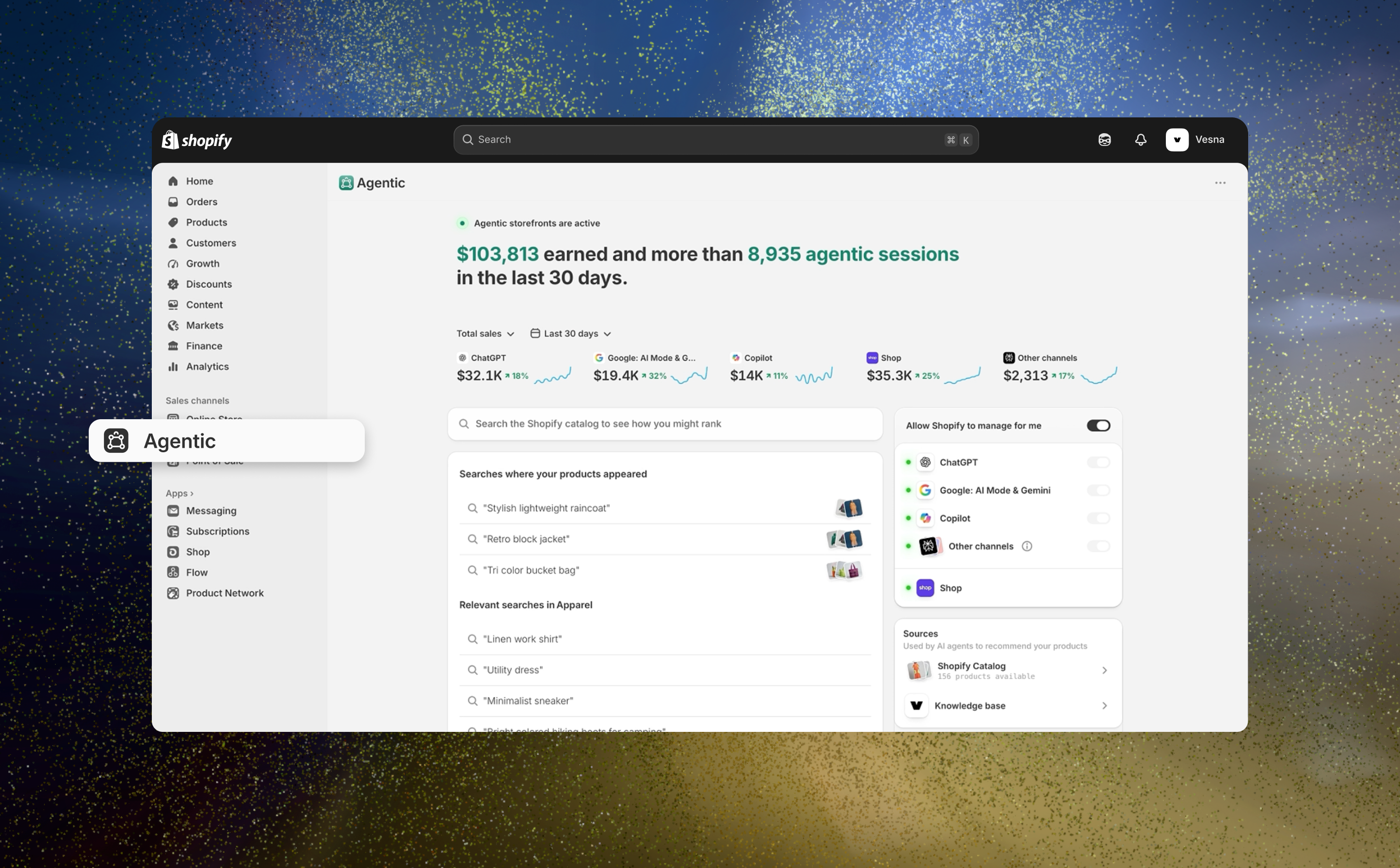
Once market demand reached undeniable scale, the platform operator moved to eliminate the transactional intermediaries. The introduction of unified Shopify product bundling primitives transformed bespoke software configurations into default catalog attributes. Multi-million-dollar businesses built on basic SKU grouping logic discovered their core value proposition had vanished overnight. Their offerings were suddenly exposed as transitory user interface modifications rather than enduring enterprise software products.
"Shopify Editions is how we share over 100+ product updates twice a year. We're giving merchants enterprise power out of the box so they don't need a duct-taped stack of fifty different apps to run their business."
Harley Finkelstein, President of Shopify, Announcement on X
The App Store Incubation Cycle
- Phase 1: Ecosystem Exploration (Years 1–3): Independent developers identify unaddressed merchant pain points (e.g., custom checkout fields, post-purchase upsells). Merchants absorb $30–$150/month per app.
- Phase 2: Platform Telemetry & Market Validation (Years 3–5): The platform aggregates installation velocity and conversion impact across millions of checkouts, confirming universal demand.
- Phase 3: Native Platform Ingestion (Editions Rollout): The capability is rebuilt as a performant core primitive (e.g. Shopify Functions, Checkout Extensibility) and bundled for free into core merchant tiers.

02Architectural Determinism: Performance as an Anti-Competitive Moat
Technical architecture serves as the ultimate justification for ecosystem consolidation. For years, independent merchants built storefronts through an accumulation of client-side JavaScript tags and theme overrides. Each successive third-party tool extracted its own toll on page speed, inflating the Document Object Model and delaying time-to-interactive metrics. Platform telemetry repeatedly demonstrated that bloated client scripts diminished conversion rates on mobile devices.
The deprecation of legacy theme hacks in favor of modern edge runtimes established a structural division between native and external code. Through Shopify Functions and WebAssembly runtime execution, discount algorithms and cart transformations now execute on the edge before HTML reaches the browser. External developers can access certain extension points, but the platform operator retains absolute control over execution priority and compute resource allocation. Sandboxed extensions cannot match the execution speed of internal system routines running on bare metal infrastructure.
This architectural shift turns web performance into a decisive competitive differentiator. When a merchant observes that native tiered discounting runs in sub-ten millisecond cycles while an external script causes layout shift, migration becomes an operational imperative. The narrative of performance optimization shields the platform from charges of anticompetitive foreclosure. Consolidating the software stack into the core platform runtime is framed as a technical necessity to safeguard user experience.
03Beyond Platform Parasitism: The Enterprise Survival Playbook
Software developers operating within platform ecosystems must confront an inescapable reality: building surface-level applications on rented soil guarantees eventual displacement. Any application that merely bridges an ergonomic deficit in an administrative interface is on a predetermined march toward obsolescence. The platform operator will always possess lower marginal distribution costs and superior system telemetry. Attempting to contest standard utility categories against the hosting entity is an exercise in delayed liquidation.
Viable longevity requires software architects to retreat from presentation-layer gimmicks and anchor their logic in independent data planes. Defensible businesses must build sophisticated operational infrastructure that platform operators cannot easily commoditize, such as omni-channel inventory orchestration across multiple distinct sales venues. When an enterprise software vendor manages complex ERP integrations, physical warehouse automations, or cross-border tax compliance, the underlying shopping cart platform becomes an interchangeable node. Value accrues to the system of record rather than the transactional endpoint.
Furthermore, the emergence of autonomous commerce agents and distributed checkout endpoints will disintegrate the traditional destination storefront altogether. As purchases increasingly originate inside third-party synthetic environments, conversational agents, and edge media channels, the central platform's administrative interface diminishes in relative strategic importance. Software vendors that control proprietary context graphs, predictive replenishment algorithms, and deterministic multi-platform logic will dictate merchant loyalty. By moving outside the defensive perimeter of the single-platform ecosystem, developers can transform from vulnerable app store dependents into essential commerce infrastructure.
End of entry